Random entry from the Encyclopaedia Telrhinica:

Jilis
Infamous adventurer from Il Nohrn in Eastholm.

Blog Posts: World & Cosmology

Posts about the world setting: Telrhin, Numarha, the Lowlands. Origins, cosmology, history, the gods, cultures, and pieces of the world both new and old.

Blogs posts by category: World & Cosmology Game Systems & Rules Campaigns, Sessions, and Site History

The Dream-Dark Sky

A short piece on the night sky and how it reflects the larger cosmos of Telrhin. More than a map of stars and the solar system, it tells the story of the world.
 

The sky above is dark and thick with stars, rich and vibrant and full of life.

A velvet dark ceiling, gathered around the black void at the center: the Womb, the Well of Dreams, the dream-dark source of all things.

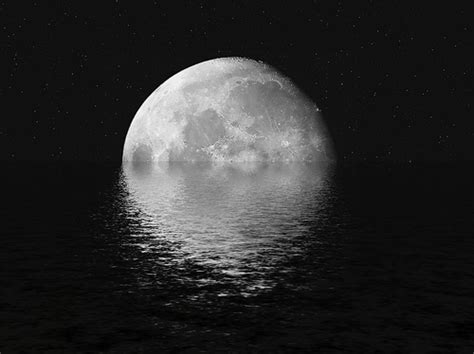
The three moons find their place too: Luna the red goddess, Tala the grey, and Mashana the broken moon that circles the great dark world of Orh heavy in the skies above.

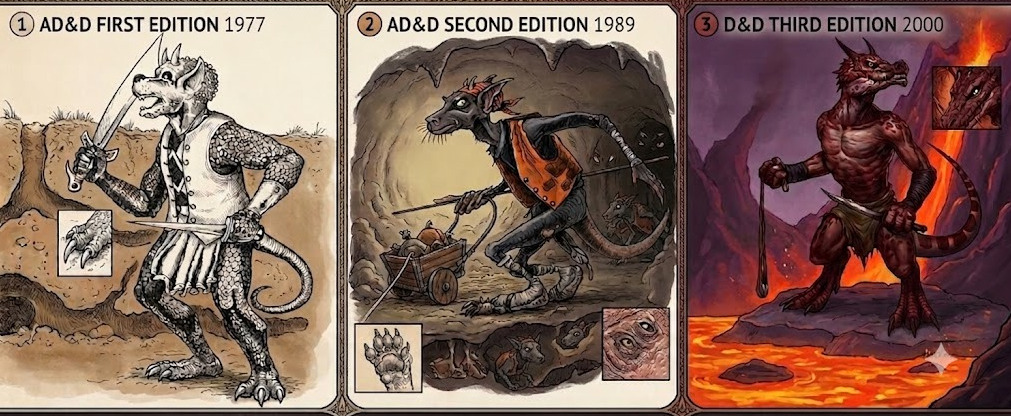
Dogs to Rats to Baby Dragons: How Kobolds Changed in D&D

Kobold phylogeny

The kobold that most of us grew up with was a nasty little dog creature. Illustrated by David C. Sutherland III in 1977 for the original AD&D Monster Manual.

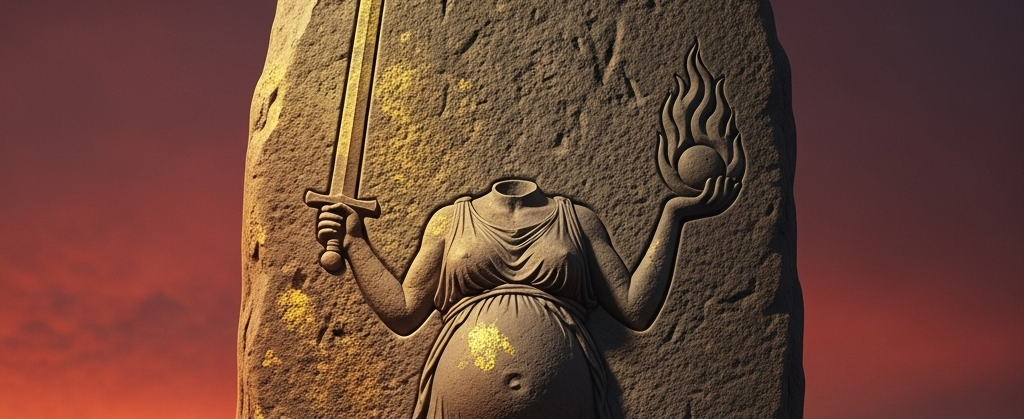
The Wars of Talon the Golden Queen

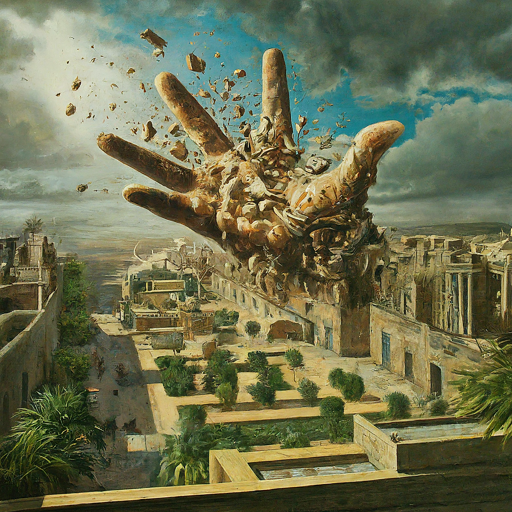
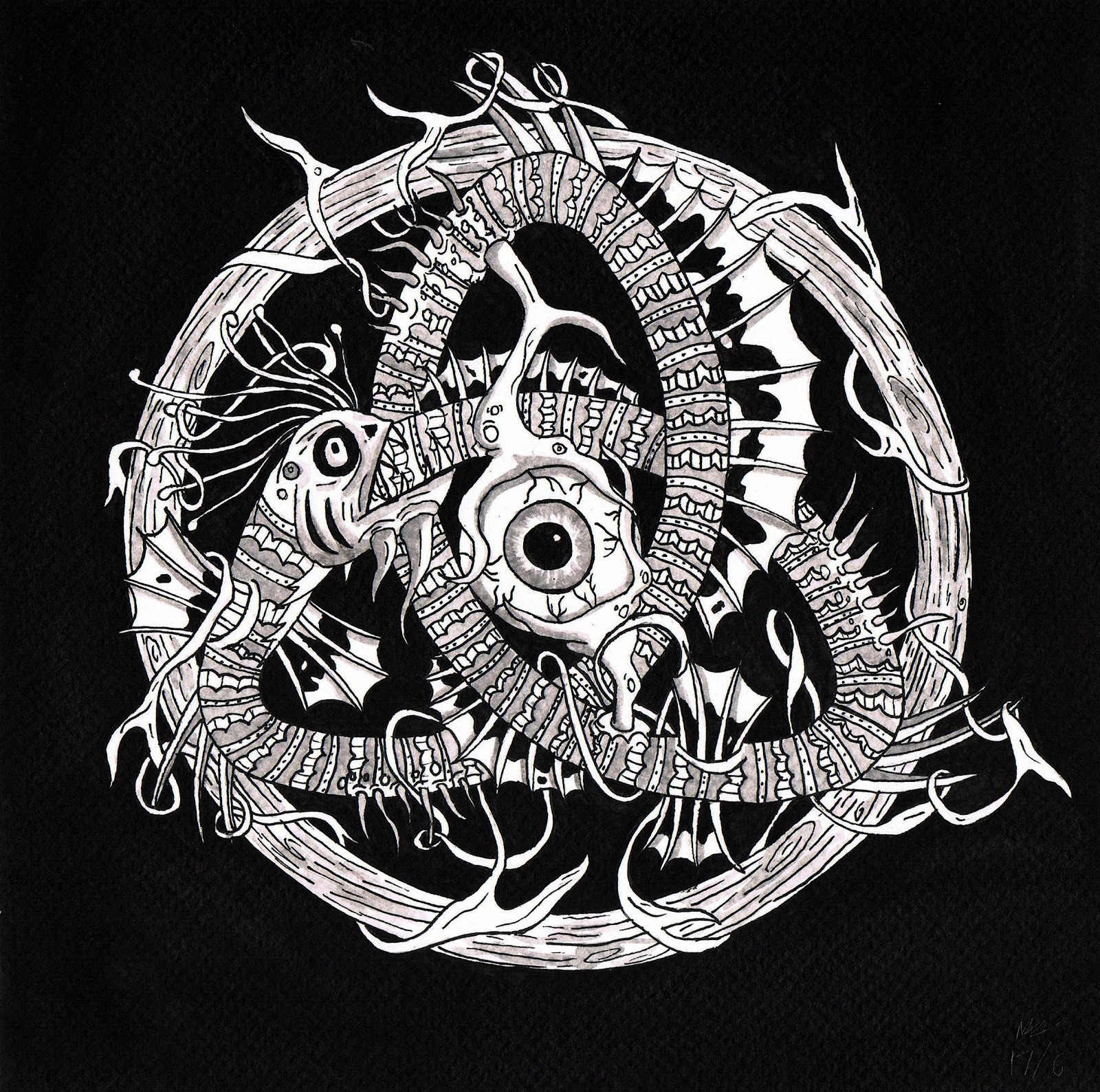
This is a snippet from the history appendix about Talon. The image shows her incarnation as Maragul, the Faceless Mother.


Goddess, demi-god, the Black Queen. Her hand has been in conflicts throughout the story of Telrhin, from the discord among the Five Gods through the betrayal of the Kaladri and the Eldring Wars.

Goddess of the broken moon Mashana, the Golden Queen liberating the world from the tyranny of the old order, leaving war and famine in her wake. 

The World Story

This is an excerpt covering the monomyth of Serpent Earth and the premise of the world story.
 

The world is changing, writhing, cracking under the strain of time. Serpent Earth is waking, her many dreams fracturing as she uncoils. 

In the beginning the world was a scattered sky of different dreams, each one a world, born from the Womb and the Well of Dreams. Born from the sleeping minds of sleeping gods.

God Meat and the Cult of Sylas

Some might argue that this is the greatest solution to starvation ever conceived and a true miracle of the gods. Others - possibly the zealous followers of other religions - called it a blasphemous abomination. When it came to light that the source of the free meat was a giant bleeding aberration, the meat lost its appeal and communities turned against it. It didn't help that it had a strange taste some people compared to fish oil. The fish taste was sometimes excused away with an elaborate tale of Sarides, the "sometimes-brother" god of Sylas, and how he plucked the meat-sack-thing from the sea.

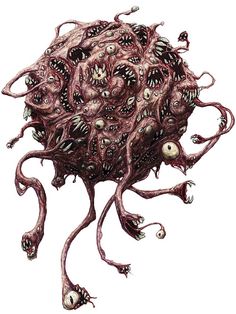
drawing of a beholder

Social Factions on the Valek Sea

The cities and coasts of the Valek are all unified by the sea. You could say that everything around the Valek faces inward, and the sea is the focus of everything: trade, food, wealth, power, and war. The roonhands of the Valek are tied to this global world, influenced by the cultures of a hundred ports, speaking the same slang creole as the sailors: called Planker, it's a mix of Thurne, Tagani and Korul.

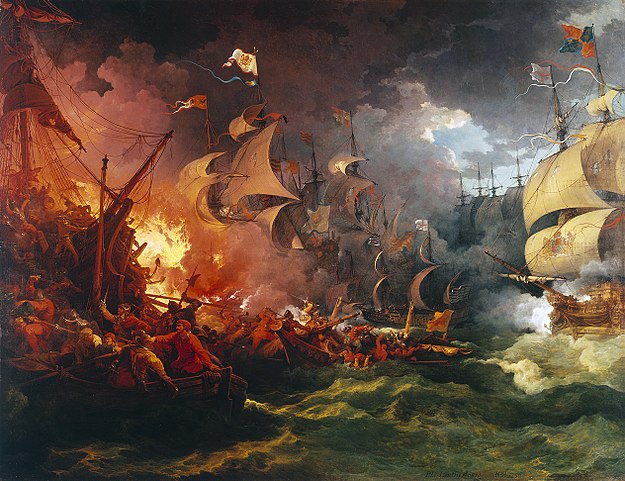
Defeat of the Spanish Armada,by Philip James de Loutherbourg

The Paths of the Chimerum

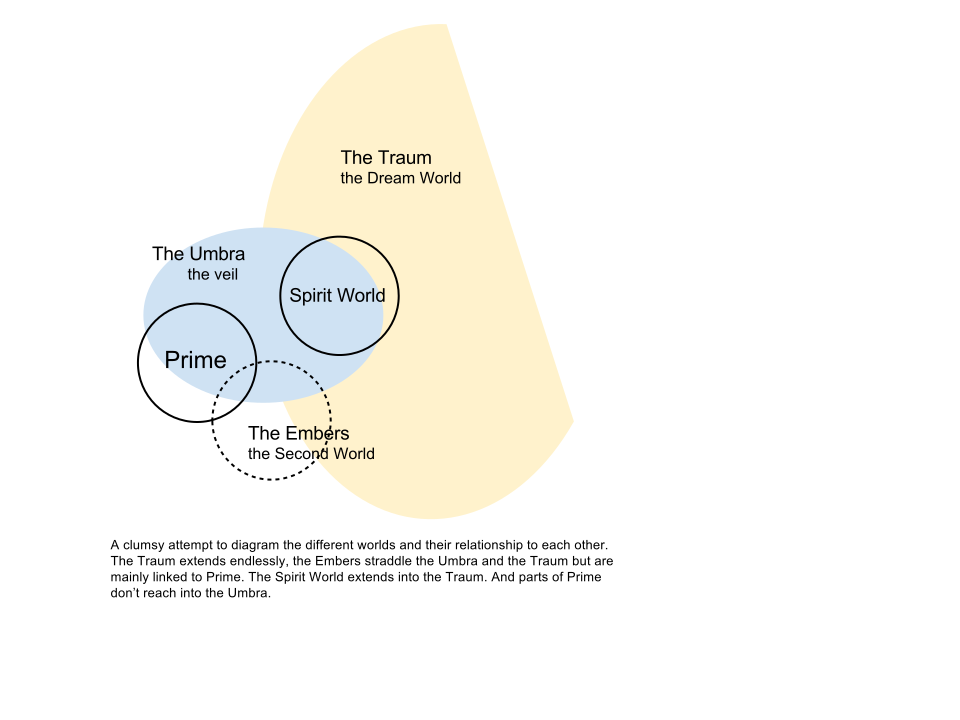
When you step into the Veil you enter a landscape of vague reality that exists between several places. More formally this is called the Umbra. It's most heavily influenced by the Spirit World, but it also touches on dreams and the edges of the Second World. It's a place without a cohesive geography and home to a long list of creatures: spirits and monsters and a few lost travelers. The short of it is, you're lost without a guide.

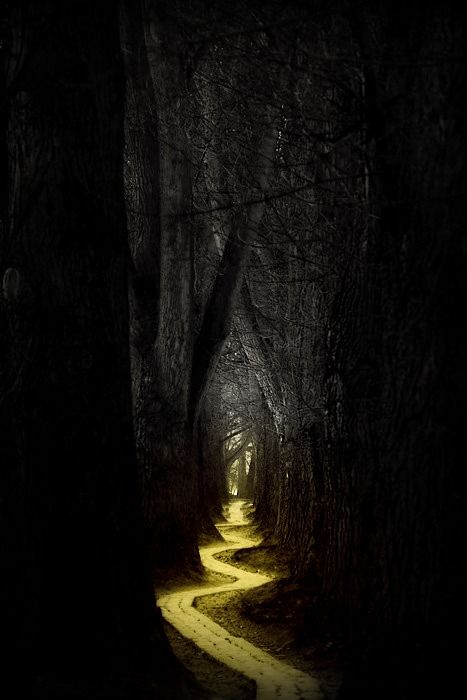
Path through the woods (source: apologies to the owner/creator, not sure where this is from)

The Gods Want You to Die

The Gods Want You to Die (and other fun facts): in the end, every god wants you to die. They may promise health or safety, love or happiness, but what matters is your faith in them. That devotion binds your spirit to them and helps deliver your glow. It's ravenous and desperate and it drives the gods more than anything else. Without it they wither and die.

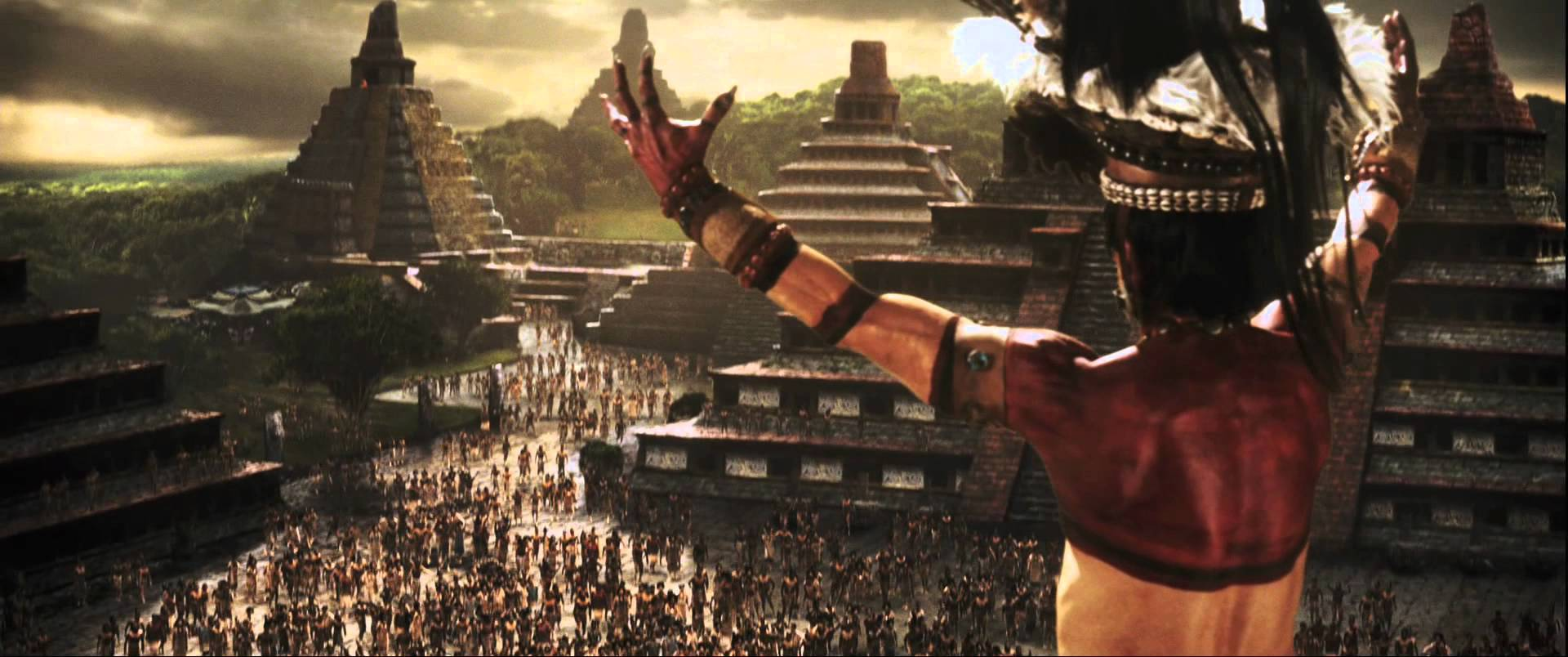
Movie still from Apocalypto

The Ninth City

"...in the soft hum of people’s sleeping minds I’ll tell you more. I’ll tell you about the Nine Rulers of the Seven States, the Lost City, the Darig Kingdoms, and the forgotten past of the Venthi people. Because here in Brok Nine every dream has found its way, and with it every secret and every truth."

This is from the work I was doing on a second edition of Maelstrom Storytelling for Hubris Games back in 2006. I think it was Chapter Three with a note to call it "At the Storm's Edge".

cover image for Maelstrom Storytelling (Hubris Games)

The Pox Crain

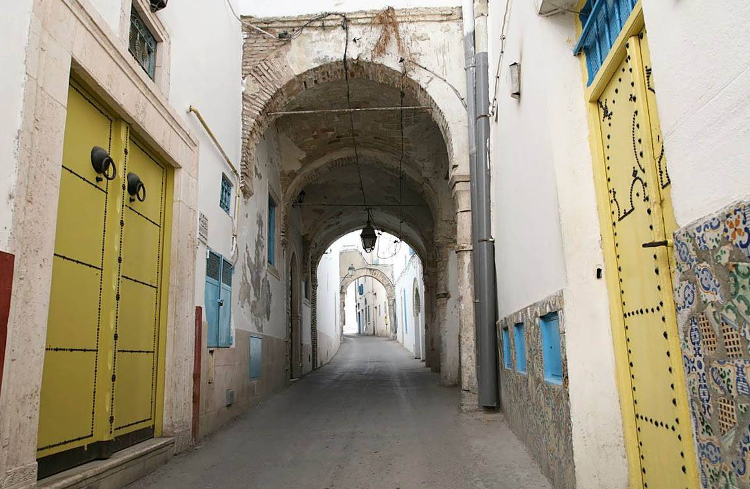
The Pox Crain is a bar in the dusty streets of Dryer Mob. Steps lead down to the relative cool of a low vaulted cellar near the Ivory Souk in Southwarren. It smells of hookahs, fish oil from the small kitchen, and cabbage. Sounds of the souk drift in from the street above and mix with the conversations of old men playing tiles, washer women in the alley behind, and the talk of travelers, traders, and the occasional drunk.

To most people, that's all there is. But to some, the Pox Crain is a vexing series of half-seen pathways into the Veil, full of whispers and echoes of dreams, spirits and the dead.

image: Tunis old quarter (copyright voyagevirtuel.co.uk)

Lost Gods

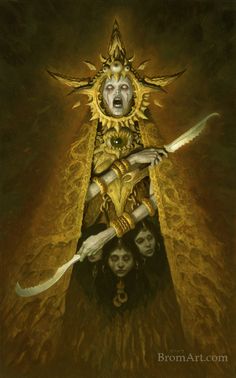
If there were such a thing as archaeologists they'd find remnants of forgotten gods as well as different interpretations of the current ones. There's Bachnel, the brother of Gahl who was god of night and dreams, and the Goat God of the Grasslands called Puknet. There are ancient Rayikian texts with references to Borgia goddess of seizures and possession. There are whole religions that are lost, like the Sanctum of the Four Winds.

image: Brom's Lost Gods

Revisiting the Origin Story

Last post mentions the de-elfing process, which led to a revisit of the world origins and the why/whats of it all:vthe diegesis.

The new vision rethinks the chain of events from the Dream to the Agon, which ushered in the Mythic World (Antedivisian) before the Fracture. From there it's the balancing act of the Ehtre: the struggle between the Course of Dreams and the Ascendancy.

Dwarves and Elves: De-Elfing the Fantasy World

As we rebuilt Telrhin a few years back, the impulse was a full embrace of nostalgia. The whole panache of beloved geek fantasy from our gaming years. We're living in the Old School Renaissance after all.

But there comes a time to de-elf the world. We may have re-invented everything top to bottom in Telrhin Mark IV, but the old names were still there, ripe with stereotypes and the stolen ideas of others before us. The backstory to the "older" races was re-imagined, history re-thought, origin myths re-invented.

A Bird's Eye View of the City of Pearl

(from the Field Guide to the Lowlands)


From overhead the City sits perched on an outcrop of rock, thrust into the Valek and shorn from the Lowlands by the wetlands between them. The broken bridge says it all, and from above looks like a finger pointed toward land. The city is a sea of whitewashed stone, dotted with colorful doors and shutters and the tiles and slates of the rooftops.

A Central Story

This is a write-up of the story at the center of the world, the flavor and theme inside the structure. The Tale of the Ember Queens:

The Two Queens, first among the Old Ones (the Ethrings) and last vessels of the creation song. They are the soft silk of an ancient truth, a long thread of purpose in the tapestry of the world, shaped by the unfolding of years, the choices of man and the dreams of the Embrings as they slide into forgetfulness.

In their unfinished tale lie the secrets of the world.

Re-Designing an FRPG World

The older incarnations of Telrhin were a rehash of the Tolkien story: once mighty civilizations, tarnished and diluted over time from change and the emergence of "man", battling an ancient evil in the form of the Black King, Talon.  There were gods and a cosmic struggle layered into this, and later in 'mark iii' the idea of a crossroads of fate emerged, determining the future paradigm.